
Quick Answer
Cat litter tracking is decided inside the box, not at the door. Most of the litter on your floor left the box stuck to a paw, or was kicked over the side while your cat was digging, so the fixes that work are the ones that change the digging: a coarser or heavier litter, a shallower fill of about two inches, and a box big enough that the cat turns around inside it instead of over the edge. A mat only catches what has already escaped, which is why buying one first is the usual disappointment. Enclosing the box does reduce scatter, and it comes with one documented catch that product pages leave out.
Litter on the floor is one of those problems people solve in the wrong order. The mat gets bought first, then a second mat, then a hooded box, and the hallway still crunches underfoot. That order is backwards, because a mat is the last line of defence rather than the first, and by the time litter reaches it the mistake has already happened.
What follows is the same problem taken from the other end: what makes litter leave the box in the first place, and which changes actually alter that. Each recommendation is tied to published guidance from a veterinary school or a veterinary behaviour body, because most advice about litter is written by whoever is selling the litter.
Why does cat litter tracking happen?
Litter leaves the box by two routes, and they have different fixes.
The first is scatter. A cat digging before and covering after throws litter sideways and backwards, and anything that clears the rim lands on your floor. This route is about geometry: how high the sides are, how much room the cat has, and how much litter is in there to throw.
The second is carry. Granules stick between the toes and in the fur around the paws, then drop off along the route the cat takes afterwards, which is why you find a trail rather than a pile. This route is about the granule itself: its size, its weight, and how well it clings.
Almost every product sold for this problem addresses the second route only, and only after the fact. That mismatch is what makes the shopping feel futile.
Fix 1: the litter itself, and the trade-off nobody mentions
Grain size is the single biggest lever on carry, and here the advice runs into an awkward fact: the litter that tracks least is not the litter your cat is most likely to prefer.
Ohio State University's Indoor Pet Initiative is unambiguous about the preference. Its guidance states that "Most cats prefer fine-grained, unscented litters." Cornell's Feline Health Center says the same thing in slightly different words, recommending "unscented, finer-textured litter about one to two inches deep."
Fine grains are also the ones that wedge between toes and ride out of the box. So switching to a large-granule litter, a pellet or a crystal is a real reduction in tracking and a real gamble on your cat's willingness to use the box. That is the trade, stated plainly.
The way to take the gamble cheaply is to not take it all at once. Run the new litter in a second box next to the current one for two weeks and watch which box gets used, rather than replacing the litter your cat already accepts. If the new one is ignored, you have lost the price of one bag instead of causing a house-soiling problem that costs far more to undo. What that problem looks like when it arrives as stools beside the box, and how to work out which of its causes is yours, is in why cats poop outside the litter box.
Fix 2: fill to two inches, not to the top
Overfilling is the most common and most invisible cause of cat litter tracking, because a deep box feels generous rather than wasteful.
Both sources put the number in the same place. Ohio State says to "Fill boxes with enough litter to permit the cat to scratch and bury waste (usually about 2 inches deep)." Cornell gives the same range, one to two inches.
Beyond that depth you are not adding comfort, you are adding ammunition. The cat digs the same amount either way, and everything above the useful depth is simply more material available to be thrown over the side. This fix costs nothing, takes one minute, and is the only one on this list that also saves you money on litter.
Fix 3: a bigger box, because most scatter is overshoot

A cat that cannot turn around comfortably inside the box turns around at the edge of it, and the edge is where the litter goes over.
Ohio State's rule is a size you can check with your eyes: the box "should be large enough for your cat to stand up (on all fours) and turn around in." Cornell adds the two groups this fails most often, noting that "Overweight and large cats need bigger boxes."
Boxes sold as large are often smaller than this rule requires, which is why a plain plastic storage tub with an entrance cut into one side outperforms most purpose-built boxes at a fraction of the price. It looks worse in a living room. That is the entire objection to it, and it is the objection the rest of this article keeps circling back to.
Fix 4: does a litter mat actually stop tracking?
A mat does one job well and a different job badly, and the two get confused.
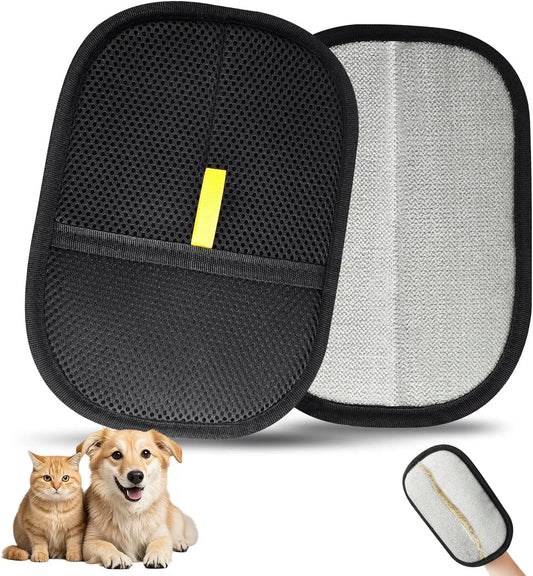
What a mat does well is intercept. Granules already stuck to a paw come loose on a textured surface, so the litter ends up somewhere you can tip into a bin instead of spread across three rooms. That is worth having.
What a mat cannot do is prevent. It has no effect on scatter over the rim, no effect on grain size, and no effect on how deep you filled the box. If you buy a mat and change nothing else, the amount of litter leaving the box is identical and you have simply moved where it lands. That is why mats have a reputation for not working: they are usually asked to do the job of the three fixes above.
The related product to be careful with is the liner. Cornell's note is blunt: "A liner may help keep the box cleaner, but many cats don't like them." Claws catch in the plastic during digging, and a cat that dislikes digging in its box is a cat looking for somewhere else to go.
Fix 5: high sides, hoods and litter box furniture, and the catch
Enclosing the box is the most effective single change against scatter, for the obvious reason that litter thrown upward and sideways hits a wall instead of your floor. High-sided boxes, top-entry boxes and cabinets that hide the box entirely all work on the same principle.
Here is the catch, and it is documented rather than hypothetical. Cornell's position is that "Most cats prefer an uncovered box that lets odors escape and allows a 360-degree view of their surroundings." Ohio State is milder but adds a practical warning: some cats do prefer the privacy of a cover, and "Remember that covered litter boxes will concentrate odors more than uncovered boxes."
The research is more forgiving than Cornell's line suggests, and the nuance is the useful part. A 2013 study by Grigg, Pick and Nibblett in the Journal of Feline Medicine and Surgery gave cats a covered and an uncovered box side by side. The American Veterinary Society of Animal Behavior summarises the result as "the majority of cats do not have a preference over hooded versus non-hooded litter boxes", while pointing out that "Even though the cats as a population did not have a strong preference for either box, eight cats in the study did have a strong preference", and that the boxes used were unusually roomy, so "it is possible that the cats didn't care if the box was covered or uncovered because the box was so roomy".
Read together, those give three conditions rather than a yes or no. An enclosure is a reasonable bet if the box inside it is large, if the enclosure is ventilated rather than sealed, and if you scoop it on the same schedule you would an open box. AVSAB's own summary of what cats actually want is short: "cats prefer clean, frequently scooped boxes". A cabinet that makes the box easy to forget about fails on the one variable that matters most.
And whichever you choose, watch your own cat rather than the average. Eight of the cats in that study had a firm opinion. Yours may be one of them.
Fix 6: where the box sits decides how far the litter travels
Two homes with identical boxes end up with very different floors, because the surface outside the box is doing half the work.
Litter dropped on a hard floor stays where it lands and can be swept in one pass. Litter dropped on carpet is pushed into the pile by the next footstep and needs a vacuum to retrieve, which is why the same quantity feels like a far worse problem in a carpeted hallway.
The constraint is that you do not get a free hand in placing the box. Cornell's requirement is that "Most cats prefer a location that is quiet, private, separate from their feeding area, and easily accessible 24 hours a day." Quiet and private tends to mean bedrooms and hallways, which tends to mean carpet. Moving a box to the tiled bathroom solves your problem and may create the cat's.
The workable version is to keep the location the cat accepts and change the surface under it: a washable hard mat or a piece of vinyl beneath the box and its immediate exit path, rather than relocating a box that is already working.
Fix 7: scooping is a volume problem before it is a smell problem
Frequent scooping is usually sold as odour control, and it is that, but it also directly reduces how much litter ends up in your house.
Ohio State sets the cadence: "Litter boxes should be scooped at least once a day and washed once a week with mild dish detergent." Cornell puts the same duty in terms of the litter type, advising that "If you use clumping litter, remove feces and clumps daily and add clean litter as needed."
The mechanism for tracking is straightforward: a cat digs longer and more urgently in a box it finds unsatisfactory, and a longer dig throws more litter. A box scooped daily is dug in less, and clumps that are removed cannot be broken up and dragged out later.
If odour is your real complaint rather than the mess, that is a different set of levers from these and deserves its own treatment rather than a paragraph here. That treatment is now written: how to make a litter box not smell, starting with the fact that the odour is built by bacteria after the deposit rather than arriving with it.
Fix 8: the cat, and the small part of it you can change
Some cats simply carry more litter than others. Long-haired cats have fur between the pads that holds granules the way a brush holds dust, and a cat that digs enthusiastically will always move more litter than one that scratches twice and leaves.
The part you can act on is the fur, not the temperament: keeping the hair between the pads trimmed gives the granules less to hold on to. It is a grooming job worth asking your vet or groomer to demonstrate once rather than attempting blind with scissors near a paw.
Beyond that, digging style is not a fault to correct. A cat that covers thoroughly is behaving normally, and the answer is to give that behaviour somewhere to happen that is not your hallway.
The eight fixes, ranked
| Fix | Effort | What it changes |
|---|---|---|
| Fill to two inches | One minute, free | Less material available to throw over the rim |
| Scoop daily | Two minutes a day | Shorter digs, and clumps gone before they break up |
| Bigger box | Cost of a storage tub | The cat turns around inside instead of over the edge |
| Coarser litter | One bag, two-week trial | Granules too heavy to ride out on a paw. Carries acceptance risk |
| Enclose the box | Highest cost | Scatter hits a wall. Needs a big box inside and daily scooping |
| Hard surface underneath | Low | Sweepable instead of vacuumable, without moving the box |
| Litter mat | Low | Catches carry. Changes nothing about how much leaves the box |
| Trim paw fur | Occasional | Long-haired cats only, and worth being shown how first |
When it is not a tracking problem at all
Two situations look like cat litter tracking and are not, and both are worth separating out before you buy anything.
The first is litter appearing far from the box in quantity, or waste appearing outside it. That is a house-soiling question rather than a housekeeping one, and Cornell's guidance starts somewhere else entirely: with a veterinary check, and with the number of boxes available. What that number should be, and why the placement of the boxes decides more than the count does, is taken apart in how many litter boxes per cat, and where they go. Its rule is to "Keep as many litter boxes as cats in the house - plus one."
The second is a sudden change. Tracking that has been constant for a year and doubles in a week is telling you something about the cat rather than the litter: a longer dig, more visits, or more urgency. If the visits themselves have changed in frequency, that is a reason to call a vet rather than to change brand. It is the same logic that applies to whether cats really need a water fountain, where the honest answer also turned out to be that the equipment is rarely the variable that matters.
Litter habits are also worth thinking through before leaving a cat home alone for a long day, since a box that is fine for eight hours is not automatically fine for fourteen.
What we sell, and what we do not
For the sake of being clear about who wrote this: Ziveko sells interactive and automatic cat toys, and at the time of writing we do not sell litter, boxes, mats or enclosures. Nothing above is pointing at a product of ours. If your cat is digging with unusual force, or spending a strange amount of time in the box, the more useful thing to read is on signs your cat is understimulated, because an under-occupied indoor cat expresses it in more places than the litter box.
Frequently Asked Questions
How do you stop cat litter from tracking everywhere?
Work inside the box before you work outside it. Fill to about two inches rather than to the top, use a box the cat can stand up and turn around in, scoop daily, and only then add a mat at the exit. A mat alone catches litter that has already left and changes nothing about how much leaves.
What litter tracks the least?
Larger and heavier granules such as pellets or crystals travel less than fine clumping litter, because they are too big to wedge between the toes. The trade-off is real: Ohio State's Indoor Pet Initiative reports that most cats prefer fine-grained, unscented litters, so test a new litter in a second box alongside the old one rather than switching outright.
Do litter mats actually work?
They work at what they are for, which is catching granules off a paw so they land somewhere you can tip into a bin. They do not reduce scatter over the rim and they do not affect grain size or fill depth, so a mat bought on its own usually disappoints.
Does a covered litter box stop tracking?
It reduces scatter, since litter thrown sideways hits a wall. Cornell's Feline Health Center notes that most cats prefer an uncovered box that lets odours escape and allows a 360-degree view, while a 2013 study summarised by the American Veterinary Society of Animal Behavior found that most cats showed no preference between hooded and non-hooded boxes, with eight individual cats in that study having a strong opinion either way. Use a covered box if yours accepts it, keep the box inside it large, and scoop it daily.
How deep should cat litter be?
About two inches. Ohio State recommends enough litter to permit the cat to scratch and bury waste, usually about 2 inches deep, and Cornell gives a range of one to two inches. Anything deeper adds no benefit and gives your cat more material to throw over the side.